Knockdown Rebuild Melbourne: Complete Guide to Costs & Process in 2026
Thinking of demolishing and rebuilding on your Melbourne block? This 2026 guide covers realistic knockdown rebuild costs, the step-by-step process, timelines, Victorian permit and asbestos rules, and the new Home Warranty protections, with answers to the questions homeowners ask most.
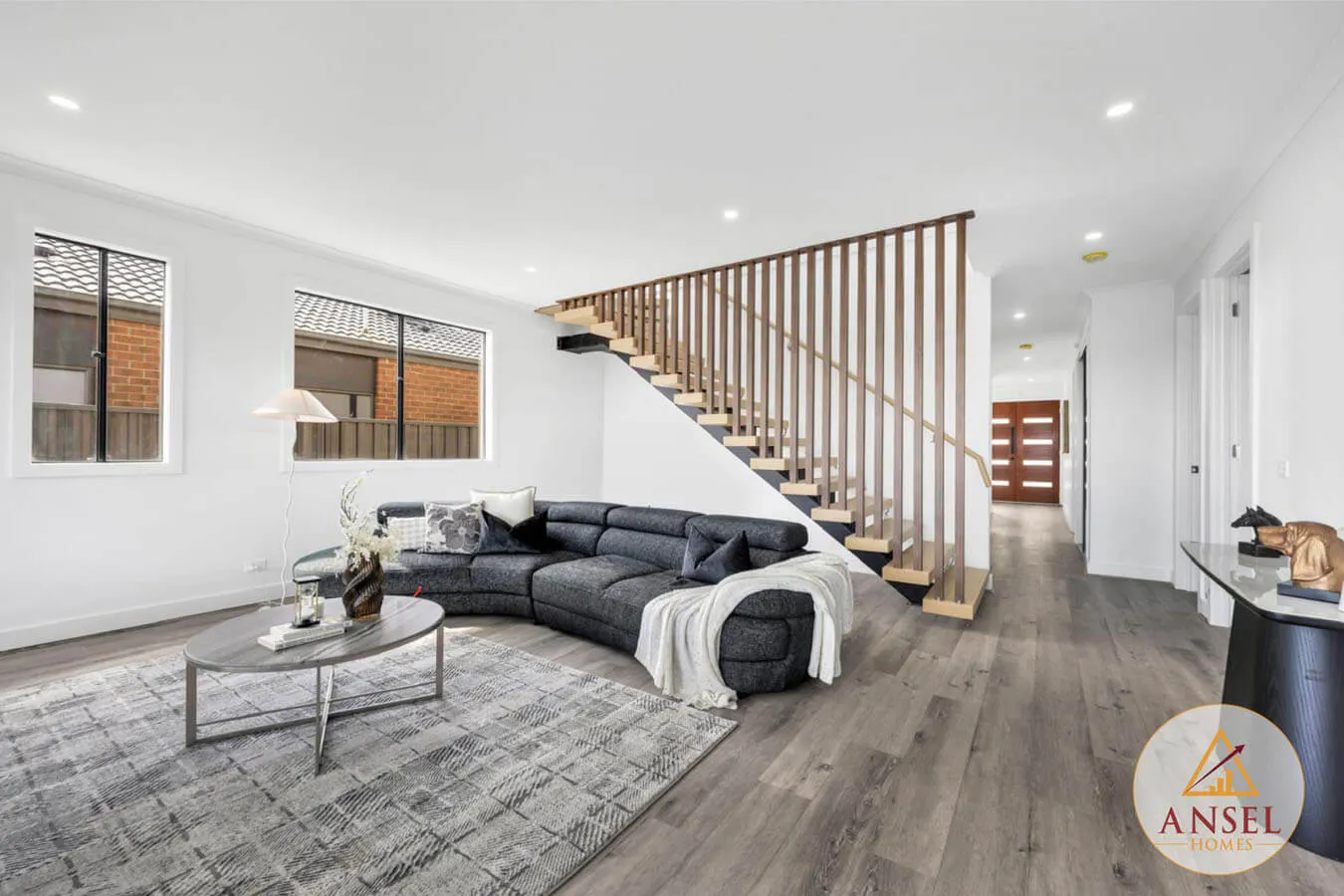
A knockdown rebuild in Melbourne means demolishing your existing home and building a new one on the same block, so you keep your suburb, your neighbors and your land, but get a home designed for how you live today. In 2026, most Melbourne knockdown rebuilds cost roughly $450,000 to $900,000 all-in, take 12 to 24 months from first conversation to handover, and need a demolition permit, council consent and (for homes built before 1990) careful asbestos management.
This guide covers the real costs, the step-by-step process, Victorian permit rules and the new Home Warranty protections that started on 1 July 2026. It is written by the team at Ansel Homes, a custom home builder in Melbourne's western and northern suburbs, and every regulatory point links back to a Victorian Government or council source so you can check it yourself.
Key takeaways
• Budget: $450,000–$900,000 is the typical all-in range in 2026; premium custom homes can exceed $1.5 million.
• Timeline: plan for 12–24 months, including design, approvals, demolition and construction.
• Permits: demolition always needs a building permit; a Heritage Overlay (or some Neighborhood Character Overlays) also needs a planning permit.
• Asbestos: assume it is present in any pre-1990 home and get it assessed before you lock in your budget.
• New protection: contracts signed from 1 July 2026 are covered by Victoria's Home Warranty scheme (up to $400,000).
What is a knockdown rebuild?
A knockdown rebuild (KDR) is a project where you demolish your existing house and build a brand-new home on the same land, usually managed as one coordinated project by a single builder. It suits owners who love their location but are frustrated by a layout, condition or running cost that renovation can't fix.
Melbourne homeowners typically choose a knockdown rebuild because:
• The location is right, the house is wrong. You keep your school zone, community and land.
• Renovation is hitting its limits. Major structural, layout or asbestos problems can push a renovation close to the cost of a new build.
• New homes perform better. Since 1 May 2024, new Victorian homes must achieve a 7-star NatHERS rating and a whole-of-home energy rating of at least 60.
• No stamp duty on your own land. Because you already own the block, you generally don't pay stamp duty on the build, unlike buying a different property.
Our dedicated knockdown and rebuild service covers the full journey, from initial site assessment and council approvals through to construction.
How much does a knockdown rebuild cost in Melbourne in 2026?
Most Melbourne knockdown rebuilds cost between $450,000 and $900,000 in 2026 once demolition, site works, approvals and construction are included, while premium or architect-led homes can reach $1.5 million or more. Published Melbourne cost guides vary because they assume different home sizes and finishes, so treat any figure as a starting range, not a quote.
Knockdown rebuild cost breakdown (illustrative 200 m² home)
• Demolition and site clearance: $15,000–$40,000. Driven by single vs double storey, brick vs weatherboard, site access and service disconnections.
• Asbestos removal (if present): $2,500–$20,000+. Depends on the type and quantity of material, plus licensed removal and disposal requirements.
• Soil test, site works and services: $8,000–$25,000. Slope, soil classification, drainage and connection upgrades all play a part.
• Design, drafting and engineering: $10,000–$30,000. Builder-supplied plans cost less than a building designer; architects typically charge 8–12% of build cost.
• Permits and council fees: $3,000–$10,000. Planning application fees start from $546.30, with the building permit and demolition consent on top.
• New home construction (200 m²): $420,000–$780,000. Roughly $2,100–$3,900 per m² for standard to mid-range homes; premium custom builds start at $5,000+ per m².
• Landscaping, driveway and fencing: $10,000–$50,000+. Often excluded from base build prices.
• Temporary accommodation (9–15 months): $23,000–$36,000. Based on rent of roughly $450–$700 a week for a 3-bedroom home, plus double moving costs.
Adding those ranges together gives an illustrative total of roughly $490,000 to $990,000, with most projects landing mid-range.
Ranges are indicative, compiled from published 2026 Melbourne cost guides, and will vary by site, suburb and builder. Always get a site-specific quote.
Costs outside the build itself (demolition, site works, design, approvals and rent) can add roughly $60,000 to $160,000 to your budget.
What pushes your knockdown rebuild cost up or down?
• Size and storeys: double-storey homes cost more per m² to build than single-storey, but let you fit more living space on a smaller footprint.
• Finishes and design complexity: custom facades, high ceilings and bespoke joinery move you up the per-m² scale quickly.
• The block itself: slope, reactive soils, tight access, easements and existing trees all add site costs.
• Asbestos and overlays: these are the two biggest sources of surprises, covered in detail below.
• Your location: inner-suburb councils often have stricter design controls, which can lengthen approvals and raise design fees.
If you want to see what different budgets look like, browse our home designs or visit one of our display homes.
The knockdown rebuild process: 8 steps from site check to handover
A Melbourne knockdown rebuild follows eight stages, and the order matters: you should have approvals and a signed contract in place before anything is demolished, because demolition can't be undone.
1. Check feasibility. Generate a Planning Property Report on Planning Victoria to see which zones and overlays apply, then check your title for easements and covenants and review slope and access.
2. Set your budget and finance. Speak to a broker early about a construction loan, which releases money in stages rather than all at once (see the finance section below).
3. Choose your builder and design. Compare builders on registration, inclusions and finished homes, then select a home design or develop a custom plan for your block.
4. Sign a fixed-price contract. Make sure inclusions, provisional sums and the progress payment schedule are clear, and that your builder arranges Home Warranty cover.
5. Obtain approvals. This includes a planning permit if an overlay requires one, council's section 29A demolition consent, a building permit and a 7-star energy rating report.
6. Assess asbestos and demolish. A pre-demolition asbestos inspection comes first; licensed removal, then demolition and site clearing, typically take 3 to 8 weeks.
7. Build in stages. Construction usually runs slab, frame, lock-up, fixing and completion, with an inspection and progress payment at each stage.
8. Handover and defects period. Complete a final inspection with your builder, record any defects and keep your Home Warranty certificate and compliance documents safe.
How long does a knockdown rebuild take in Melbourne?
Most Melbourne knockdown rebuilds take 12 to 24 months from your first serious conversation to receiving the keys, with construction itself usually taking 6 to 12 months. Approvals are the stage people underestimate most, and Melbourne's wet winters can add 2 to 4 weeks to the build.
• Design and documentation: 2–4 months. Faster when working from a builder's existing plans.
• Council approvals and permits: 3–4 months. Longer if a planning permit or heritage assessment is needed.
• Asbestos assessment, demolition and site prep: 3–8 weeks. Services must be disconnected first.
• Construction: 6–12 months. Double-storey and custom designs take longer.
• Total, first conversation to handover: 12–24 months. Some stages overlap.
Permits and approvals: what Victorian homeowners need
You need a building permit to demolish a house in Victoria, council consent in most cases, and a planning permit only if an overlay on your land requires one. Here is how the three approvals fit together.
Demolition permit and section 29A council consent
Demolition always needs a building permit, and under section 29A of the Building Act 1993 council must usually give "report and consent" first when the work removes more than half the building's volume (counted over three years) or any part of a street-facing facade. Councils generally have 15 business days to respond. See how your council handles it, for example Moonee Valley City Council or Mornington Peninsula Shire.
Do you need a planning permit to demolish?
Only if your planning scheme says so. A Heritage Overlay requires a planning permit to demolish, even for a building that isn't individually listed but sits in a heritage precinct, and some Neighborhood Character Overlays do too if their schedule says so. If a required planning permit hasn't been issued, council must refuse section 29A consent, so settle this before you lodge anything.
Building permit and energy requirements for the new home
Your new home needs a building permit issued by a registered building surveyor. Since 1 May 2024, new Victorian homes must meet a 7-star NatHERS rating and a whole-of-home rating of at least 60, supported by an energy rating report (see Victorian Building Authority guidance and Maroondah City Council's summary). New homes that need a planning permit must also be all-electric.
Settle your overlay and demolition-consent position first: council can only refuse consent when a required planning permit is missing.
Asbestos and demolition: the biggest budget wildcard
Assume any Melbourne home built before 1990 contains asbestos somewhere, typically in eaves, wet-area linings, external cladding, fencing or old floor coverings. Removal must be done by a WorkSafe-licensed removalist, and it is the single most common reason demolition costs exceed the first estimate.
• Who can remove it: under WorkSafe Victoria rules, unlicensed removal is limited to small amounts of non-friable (bonded) material, 10 square meters or less and under one hour of work in any seven days. Anything larger, and all friable asbestos, needs a licensed removalist.
• Notification: licensed removalists must notify WorkSafe in advance, generally 5 days before work starts (24 hours for 10 m² or less of non-friable material).
• Paperwork to ask for: a pre-demolition asbestos inspection and register, and a clearance certificate once removal is complete.
Find licensed contractors via WorkSafe Victoria's asbestos hub and read the licensed removalist requirements. Getting an asbestos survey done before you finalize your budget is one of the cheapest ways to avoid a nasty surprise.
Knockdown rebuild vs renovation: which is right for you?
A knockdown rebuild is usually the better choice when the layout, structure or hidden defects of an older home would eat most of a renovation budget, while a renovation wins when the existing home has character worth keeping (such as a heritage-listed Victorian or Edwardian) or the structure is sound.
• Typical cost (2026): a major renovation runs about $220,000–$450,000 for a whole-home job, or $280,000–$600,000 with a rear extension. A knockdown rebuild is typically $450,000–$900,000+ all-in.
• Time: renovations take 6–12 months and often extend; a knockdown rebuild takes 12–24 months including approvals.
• Cost certainty: renovations are less predictable because hidden defects and asbestos often appear mid-project. A rebuild is a fixed-price contract on a clean site.
• Layout freedom: renovations are limited by the existing structure; a rebuild gives full freedom within planning rules.
• Energy performance: it is hard to lift an old home to current standards, whereas a new home is built to the 7-star standard.
• Best when: renovate if the structure is sound or heritage controls apply; rebuild if layout, condition or asbestos make renovation uneconomic.
Not sure which way to go? Our article on the benefits of knockdown and rebuild walks through the decision, and our team can give you an honest view during a site assessment.
Your protections in 2026: BPC registration and Home Warranty
Victoria's building regulator is now the Building and Plumbing Commission (BPC), which replaced the Victorian Building Authority on 1 July 2025, and from 1 July 2026 new contracts are covered by Home Warranty rather than the old Domestic Building Insurance. Both changes affect how you should vet a builder.
• Home Warranty applies to eligible contracts signed on or after 1 July 2026, for homes up to three storeys and work valued at more than $20,000.
• Wider cover: it can respond to incomplete, defective or non-compliant work even if the builder is still trading, with maximum assistance of $400,000 per home.
• Older contracts: if you signed before 1 July 2026, your Domestic Building Insurance continues on its original terms.
Read the official detail at the BPC Home Warranty page, Consumer Affairs Victoria and Planning Victoria's building reform summary.
How do you finance a knockdown rebuild?
Most owners use a construction loan, which releases funds in stages (typically slab, frame, lock-up, fixing and completion) and charges interest only on what has been drawn. If you have an existing mortgage, lenders may let you refinance it into the construction facility, and the equity in your land often acts as your deposit.
Plan for three costs overlapping at once: mortgage repayments, rent on temporary accommodation and builder progress payments. Our team can point you in the right direction through our home financing page, and you should always confirm lending and stamp duty questions with a licensed broker and the State Revenue Office.
How to choose a custom home builder in Melbourne
The right Melbourne home builder for a knockdown rebuild is one who can manage demolition, approvals and construction under one roof, with clear pricing. Before you sign, check that your builder:
• Is registered with the BPC. Check the practitioner register for registration and any disciplinary history.
• Offers a clear, fixed-price contract with defined inclusions, provisional sums and a progress payment schedule tied to completed stages.
• Will arrange Home Warranty on your behalf and explain what it covers.
• Includes demolition and asbestos in the scope, or tells you plainly who is responsible for them.
• Can show finished homes you can visit, and has verifiable reviews from past clients.
At Ansel Homes, we are a Melbourne residential builder specializing in custom builds, architectural projects and house and land packages, led by director Sandy Randive. We display our Building and Plumbing Commission, HIA, Master Builders and Engineers Australia affiliations on our website, you can see recognition we've received on our awards page, and you can walk through a finished home at one of our display homes. If you'd rather start on fresh land than knock down, see our house and land packages.
Knockdown Rebuild Melbourne: Frequently Asked Questions
These are the questions Melbourne homeowners ask most about knockdown rebuilds, drawn from frequently-asked-question sections on current Google results and builder enquiries.
How much does a knockdown rebuild cost in Melbourne?
Most projects cost between $450,000 and $900,000 all-in in 2026, covering demolition, site works, approvals and construction. Premium custom homes can exceed $1.5 million, and a small, simple home on an easy block can sit near the bottom of the range.
How much does it cost to demolish a house in Melbourne?
Demolition typically costs $15,000 to $40,000, depending on size, materials and access. Asbestos removal, where present, is an additional cost that varies widely with the amount of material.
How long does a knockdown rebuild take?
Plan for 12 to 24 months from first conversation to handover. Design takes 2 to 4 months, approvals 3 to 4 months, demolition 3 to 8 weeks and construction 6 to 12 months.
Is a knockdown rebuild cheaper than renovating?
Not usually in upfront cost, since major renovations run roughly $220,000 to $450,000 against $450,000 or more for a rebuild. It can be better value when hidden defects, asbestos or a poor layout would consume most of a renovation budget.
Do I pay stamp duty on a knockdown rebuild?
Generally no, because you already own the land and no property is changing hands. If you buy a property specifically to knock down, stamp duty applies to that purchase, so confirm your situation with the State Revenue Office or your conveyancer.
Do I need a planning permit to demolish my house in Victoria?
Only if an overlay requires one. A Heritage Overlay requires a planning permit to demolish, and some Neighborhood Character Overlays do too. You will still need a building permit for demolition and, in most cases, council's section 29A consent.
Can I do a knockdown rebuild if I have a mortgage?
Yes. Many lenders will refinance your existing mortgage into a construction loan, using the equity in your land as your deposit. Your lender will assess whether you can service both the existing debt and the new build.
Where do I live during a knockdown rebuild?
Most owners rent for 9 to 18 months. Budget around $450 to $700 a week for a three-bedroom rental in Melbourne, plus the cost of moving twice.
Does my house have asbestos?
If it was built before 1990, assume yes until a licensed assessment shows otherwise. Asbestos removal above 10 square meters of non-friable material, or any friable asbestos, must be done by a WorkSafe-licensed removalist.
Is 2026 a good time to do a knockdown rebuild in Melbourne?
It can be, particularly now that Home Warranty gives owners stronger protection for contracts signed from 1 July 2026. The right time depends more on your finances, your block and your timeline than on the market, so get a site-specific quote and a clear budget before deciding.
What is the first step in a knockdown rebuild?
Start with a site assessment: check overlays and easements, get an asbestos inspection and confirm your borrowing capacity. A builder can then give you a realistic budget and program for your block.
Your next step: get a site-specific plan and budget
A knockdown rebuild in Melbourne is a big project, but it becomes manageable once you know your overlays, your asbestos position and your all-in budget. Start with these three actions this week:
1. Run a Planning Property Report for your address to check zones and overlays.
2. Book an asbestos inspection if your home was built before 1990.
3. Speak to a builder and a broker about a realistic budget and timeline.
Ready to talk it through? Contact the Ansel Homes team or call 1300 026 735 for a knockdown and rebuild consultation. At the time of writing we are also running a limited-time free demolition offer, so check our knockdown and rebuild page for current terms.